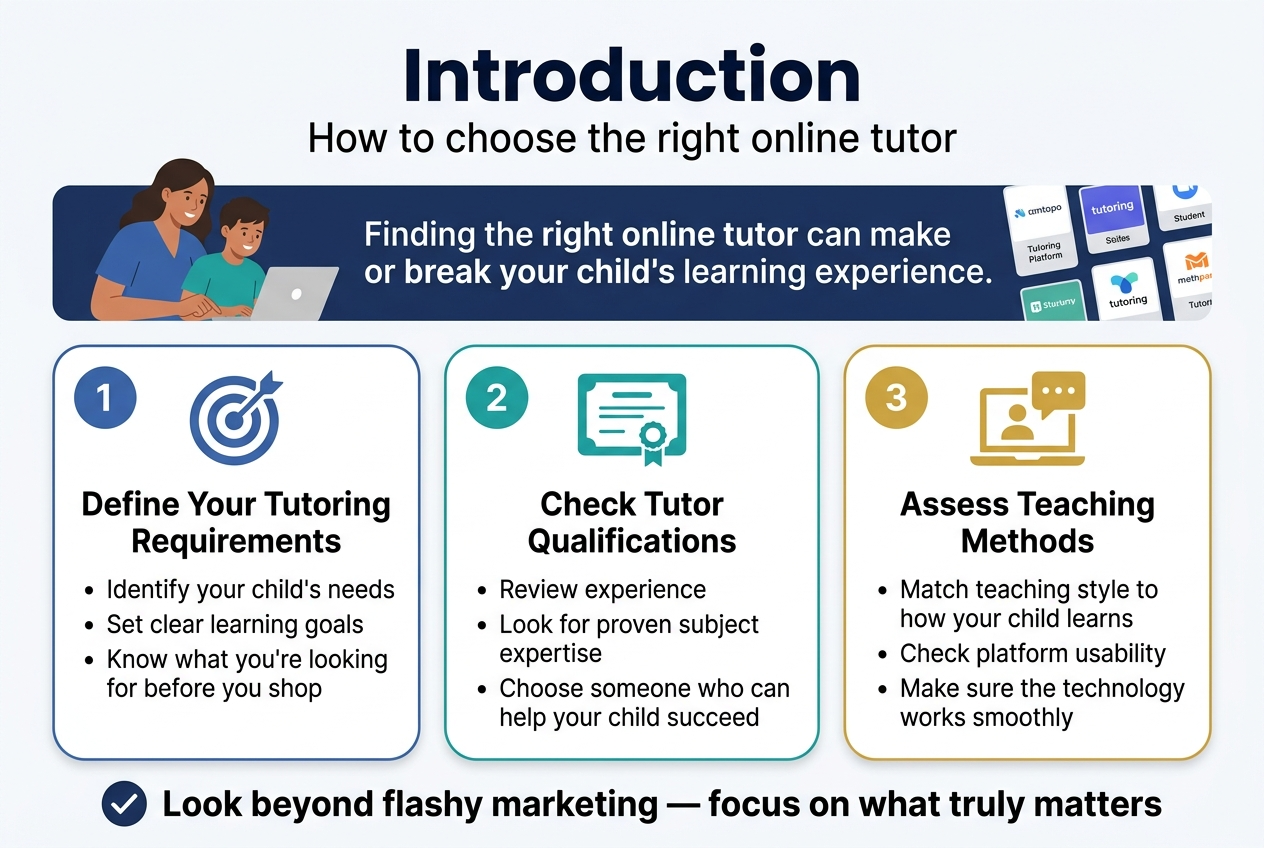
Finding the right online tutor can make or break your child’s learning experience. This guide is for parents and students who want to cut through the overwhelming number of tutoring platforms and make a smart choice that actually works.
The key to success lies in matching your specific needs with the right tutor’s qualifications and teaching style. You’ll need to look beyond flashy marketing and focus on what truly matters for your child’s education.
We’ll walk you through how to define your tutoring requirements and set clear goals, so you know exactly what you’re looking for before you start shopping around. You’ll also learn how to evaluate tutor qualifications and experience to ensure you’re getting someone who can actually help your child succeed. Finally, we’ll cover how to assess teaching methods and technology tools, because the best tutor in the world won’t help if the platform is clunky or doesn’t match how your child learns best.
Define Your Tutoring Requirements and Goals
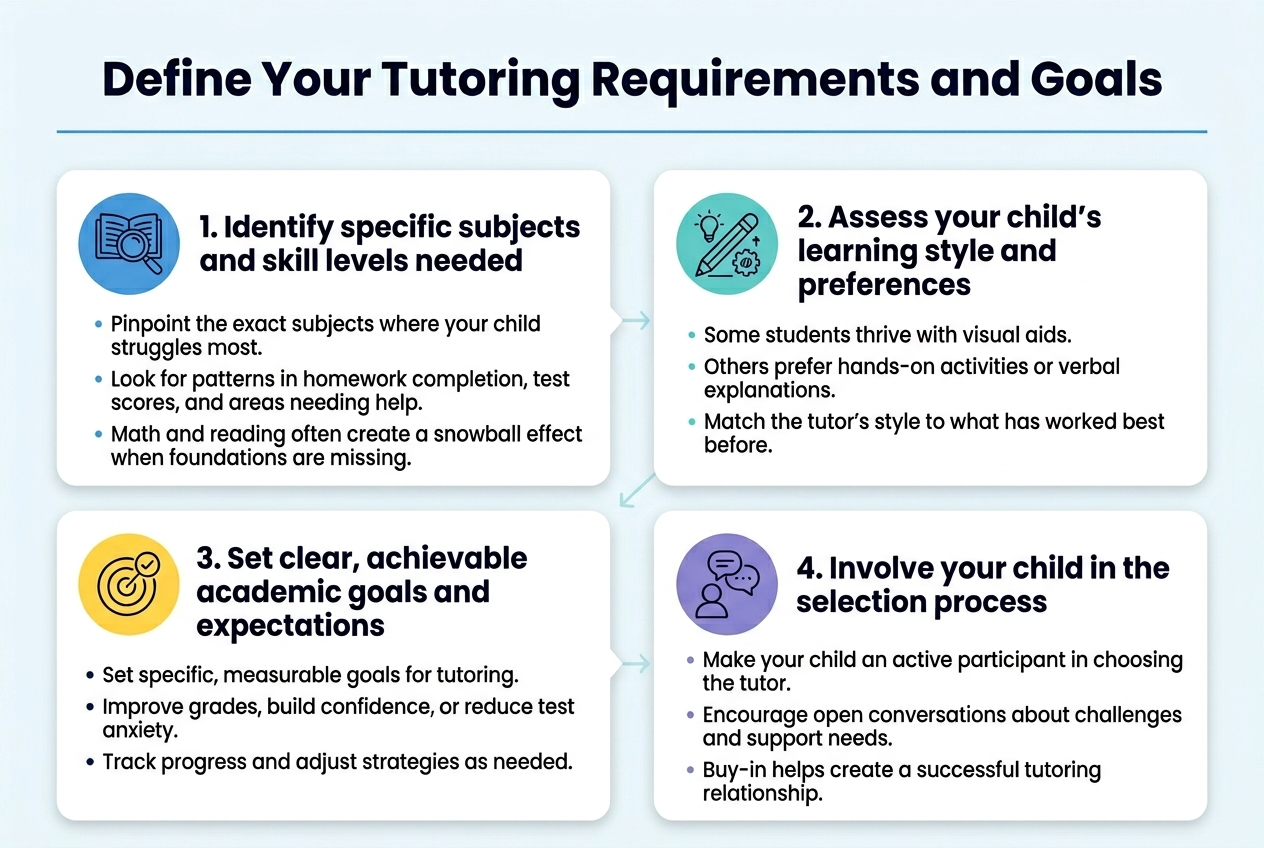
Identify specific subjects and skill levels needed
Start by pinpointing the exact subjects where your child struggles most. Look for patterns in homework completion, test scores, and areas where they consistently need help. Math and reading are common subjects where students face difficulties, as concepts build on one another and missing foundational knowledge can create a snowball effect.
Assess your child’s learning style and preferences
Understanding how your child learns best is crucial when selecting an online tutor. Some students thrive with visual aids, while others prefer hands-on activities or verbal explanations. Pay attention to your child’s natural preferences and the methods that have worked well in the past to ensure the tutor can adapt their teaching style accordingly.
Set clear, achievable academic goals and expectations
Establish specific, measurable goals for what you want to accomplish through online tutoring. Whether it’s improving grades in a particular subject, building confidence, or addressing test anxiety, having clear objectives helps both you and the tutor track progress and adjust strategies as needed.
Involve your child in the selection process
Make your child an active participant in choosing their online tutor. Encourage open conversations about their academic experiences, subjects they find challenging, and what type of support they feel would be most helpful. This involvement creates buy-in and helps ensure the tutoring relationship will be successful from the start.
Evaluate Tutor Qualifications and Experience
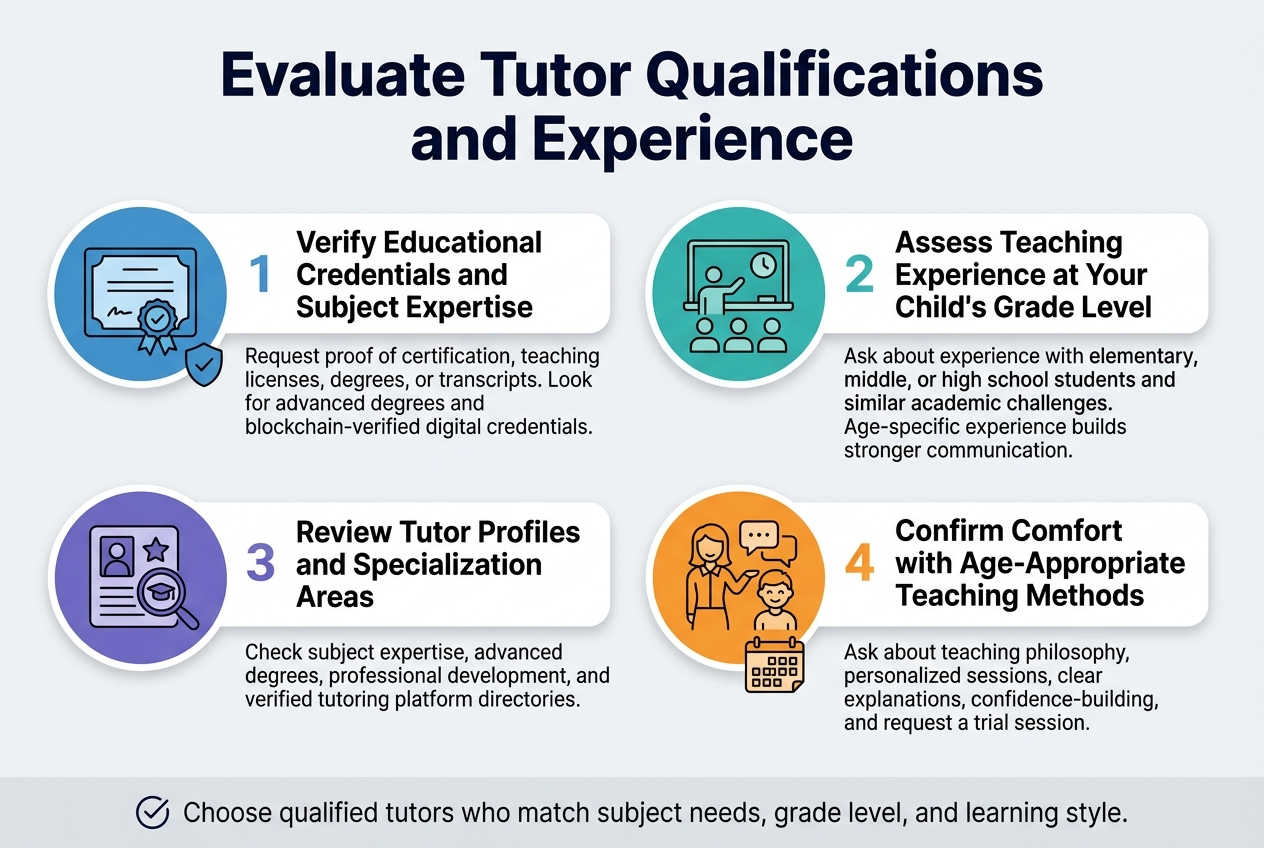
Verify Educational Credentials and Subject Expertise
Start by requesting proof of certification or degrees from potential tutors. Certified teachers should provide documentation of their teaching license, while subject-matter experts can offer copies of their degrees or transcripts. Look for tutors with advanced degrees in their field of expertise—such as mathematics or history graduates who possess in-depth knowledge of their subjects. Digital credentials stored using blockchain technology offer tamper-proof verification, providing peace of mind for parents seeking qualified tutors.
Assess Teaching Experience at Your Child’s Grade Level
Experience with specific age groups is critical when choosing how to choose an online tutor effectively. A tutor’s ability to communicate knowledge appropriately varies significantly between elementary and high school students. Ask potential tutors about their experience working with students at your child’s grade level and similar academic challenges. Tutors with relevant experience have developed age-appropriate strategies for explaining difficult concepts and adapting to different learning styles within that specific developmental stage.
Review Tutor Profiles and Specialization Areas
Examine tutor profiles carefully to identify their specialization areas and expertise. Subject-matter experts often hold advanced degrees and provide exceptional help in specialized courses, while certified teachers bring valuable pedagogical training and classroom management skills. Look for tutors who engage in professional development or continuing education, as this demonstrates dedication to staying current with educational trends and teaching strategies. Use reputable tutoring platforms that maintain verified directories of certified tutors.
Confirm Comfort with Age-Appropriate Teaching Methods
Verify that tutors can adapt their instructional approach to your child’s developmental needs and learning style. Ask potential tutors to explain their teaching philosophy and how they personalize sessions based on individual student requirements. Experienced tutors should articulate how they break down difficult material, engage students, and build confidence using methods suitable for your child’s age group. Consider requesting a trial session to observe how effectively the tutor communicates and connects with your child.
Assess Teaching Methods and Technology Tools
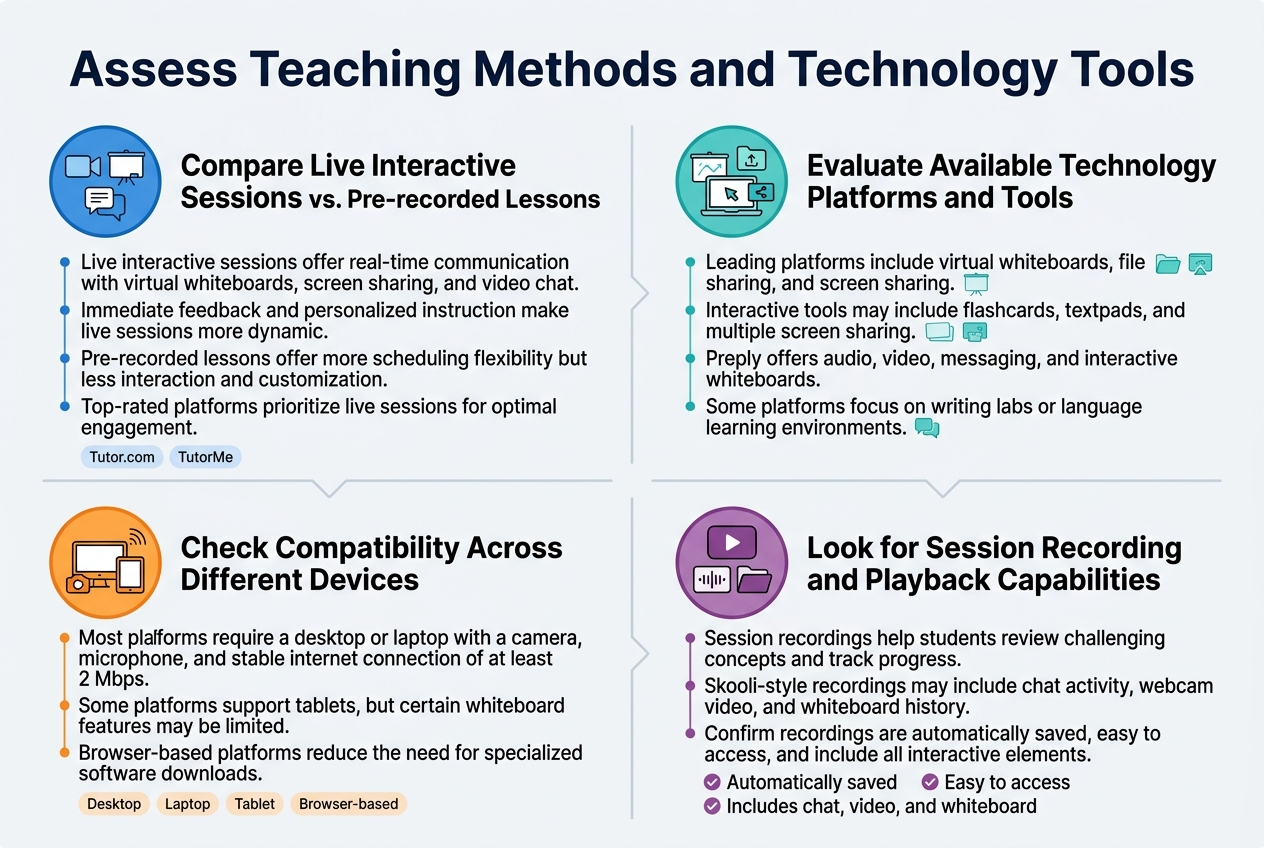
Compare Live Interactive Sessions vs. Pre-recorded Lessons
When evaluating online tutoring platforms, you’ll encounter two primary delivery methods. Live interactive sessions offer real-time communication through features like virtual whiteboards, screen sharing, and video chat, enabling immediate feedback and personalized instruction. Platforms like Tutor.com and TutorMe provide these collaborative tools for dynamic learning experiences. Pre-recorded lessons, while more flexible for scheduling, lack the immediate interaction and customization that live sessions provide. Most top-rated platforms prioritize live sessions for optimal engagement.
Evaluate Available Technology Platforms and Tools
Technology platforms vary significantly in their capabilities and features. Leading platforms incorporate virtual whiteboards for visual collaboration, file sharing systems for homework submissions, and screen sharing capabilities for software demonstrations. Interactive tools such as flashcards, textpads, and multiple screen sharing enhance the learning experience. Platforms like Preply offer comprehensive classroom features including audio, video, messaging, and interactive whiteboards, while others focus on specific tools like writing labs or language learning environments.
Check Compatibility Across Different Devices
Device compatibility is crucial for seamless tutoring experiences. Most platforms require desktop or laptop computers with cameras, microphones, and stable internet connections of at least 2 Mbps. While some platforms support tablets, functionality may be limited—for instance, Skooli notes that certain whiteboard features don’t work on tablets. Ensure the platform runs efficiently on your preferred devices and operating systems. Many modern platforms are browser-based, eliminating the need for specialized software downloads.
Look for Session Recording and Playback Capabilities
Session recording features provide valuable opportunities for review and reinforcement. Platforms like Skooli offer comprehensive recordings including chat window activity, webcam video recording, and whiteboard sharing history from sessions. These recordings allow students to revisit challenging concepts and track their progress over time. When evaluating platforms, confirm whether recordings are automatically saved, easily accessible, and include all interactive elements from the session for maximum educational benefit.
Consider Scheduling Flexibility and Availability
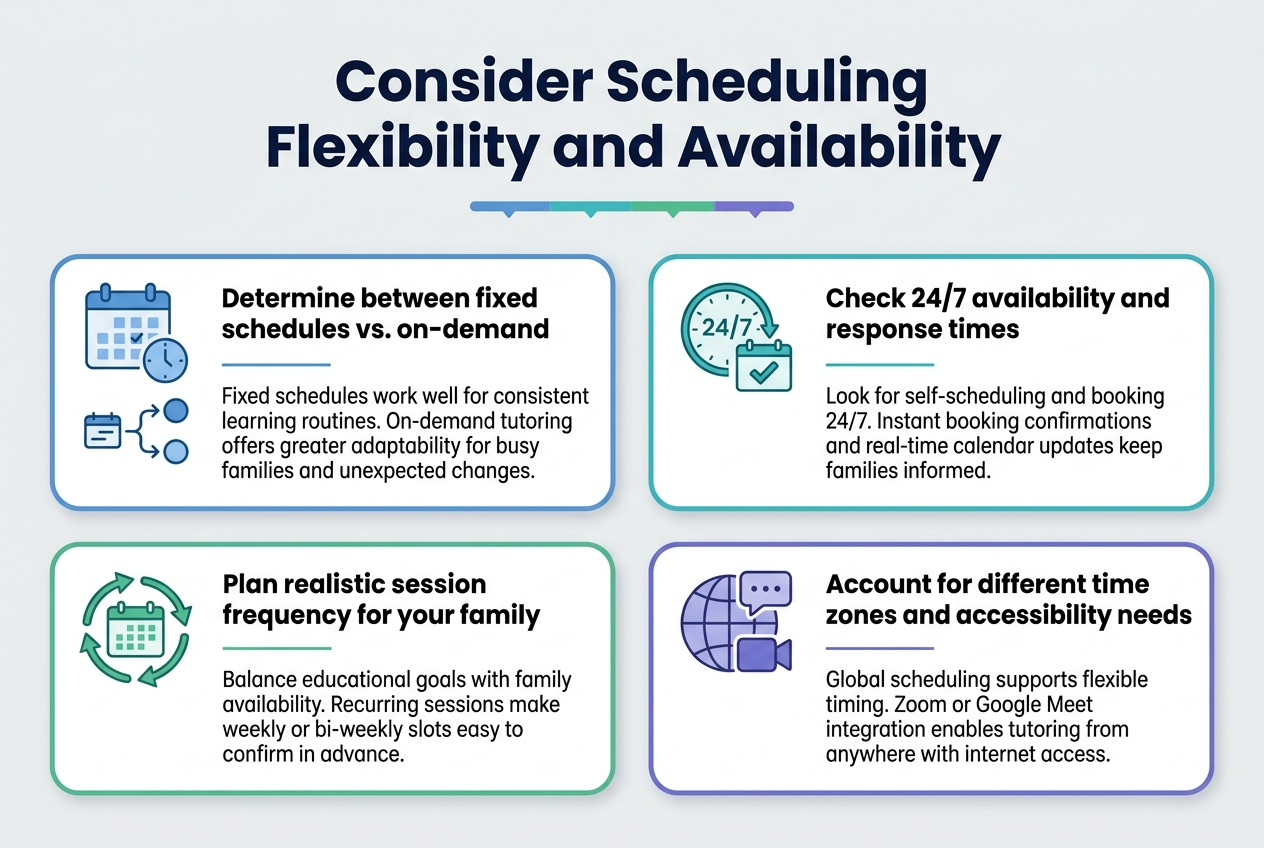
Determine between fixed schedules vs. on-demand tutoring
When evaluating scheduling options, consider whether you need structured weekly sessions or prefer the flexibility of booking as needed. Fixed schedules work well for consistent learning routines, while on-demand tutoring offers greater adaptability for busy families with varying commitments and unexpected schedule changes.
Check 24/7 availability and response times
Look for platforms that enable self-scheduling and booking 24/7, allowing parents and students to book sessions at any time without waiting for business hours. Quality tutoring platforms should provide instant booking confirmations and real-time calendar updates, ensuring you receive immediate notification when sessions are scheduled or modified.
Plan realistic session frequency for your family
Establish a sustainable rhythm that balances educational goals with family availability. Consider using platforms that support recurring sessions made easy, allowing you to confirm regular weekly or bi-weekly slots in advance. This approach helps maintain consistent learning progress while accommodating your family’s long-term schedule patterns.
Account for different time zones and accessibility needs
For families requiring flexible timing or international tutoring services, ensure your chosen platform supports global scheduling capabilities. Video tutoring platforms that integrate with tools like Zoom or Google Meet offer clients incredible flexibility by eliminating travel requirements and enabling sessions from anywhere with internet access.
Analyze Costs and Payment Structure
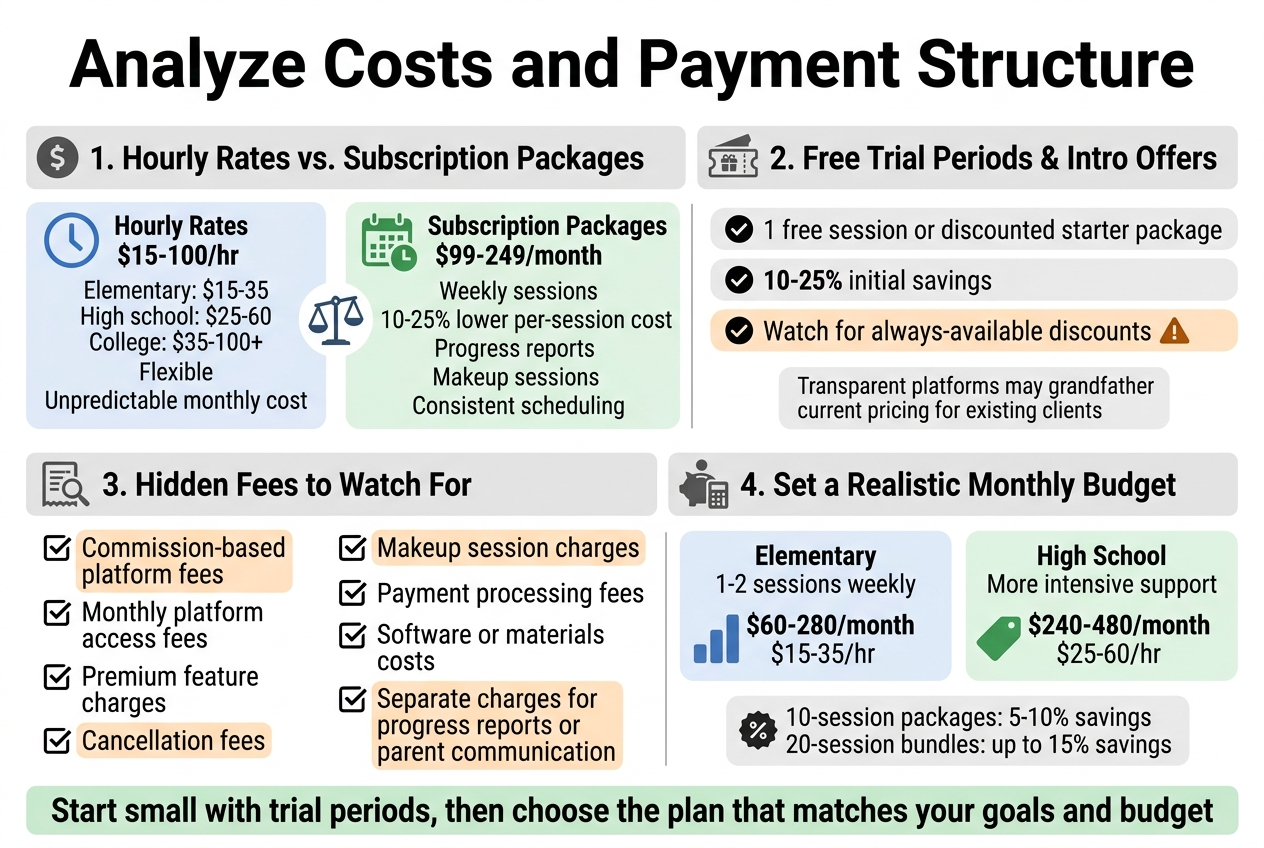
Compare hourly rates vs. subscription packages
When evaluating online tutoring costs, you’ll encounter two primary pricing structures that significantly impact your budget and learning experience. Hourly rates typically range from $15-100 per hour depending on subject complexity and tutor qualifications, with elementary subjects costing $15-35, high school courses $25-60, and college-level tutoring reaching $35-100+. This pay-per-session model offers maximum flexibility but can result in unpredictable monthly expenses and less commitment from both student and tutor.
Subscription packages, ranging from $99-249 monthly for weekly sessions, provide structured learning rhythms and often include additional benefits like progress reports and makeup sessions. These monthly plans typically reduce per-session costs by 10-25% compared to hourly rates while ensuring consistent scheduling and better retention outcomes for students.
Look for free trial periods and introductory offers
Most reputable tutoring platforms offer trial periods or discounted starter packages to help you evaluate their services before committing to long-term arrangements. These introductory offers typically include one free session or heavily discounted starter packages that allow you to assess tutor compatibility and teaching effectiveness without significant financial risk.
Time-limited promotional discounts can provide 10-25% savings on initial packages, but be cautious of always-available discounts that may indicate inflated regular pricing. Quality platforms often grandfather current pricing for existing clients when implementing rate increases, demonstrating their commitment to transparent pricing practices.
Identify any hidden fees or additional charges
Beyond the advertised hourly or package rates, several platforms impose additional costs that can significantly impact your total investment. Commission-based platforms often factor their percentage fees into tutor rates, while subscription models may include monthly platform access fees or premium feature charges.
Watch for potential extra costs including cancellation fees, makeup session charges, payment processing fees, and specialized software or materials requirements. Some platforms charge separately for progress reports, parent communication, or access to supplementary learning resources that should be included in the base service.
Set a realistic monthly budget for tutoring services
Effective budgeting for online tutoring requires considering both direct session costs and your family’s learning goals and frequency needs. Elementary students typically need 1-2 sessions weekly at $15-35 per hour, resulting in monthly costs of $60-280. High school students, especially those preparing for standardized tests, may require more intensive support at $25-60 per hour, potentially reaching $240-480 monthly.
Factor in package discounts when calculating long-term costs, as 10-session packages often provide 5-10% savings while 20-session bundles can offer up to 15% discounts. Consider starting with smaller packages or trial periods to establish learning patterns before committing to larger financial investments, and remember that consistent, quality tutoring is an investment in educational success that often proves worthwhile when matched with appropriate budget planning.
Research Platform Credibility and Reviews
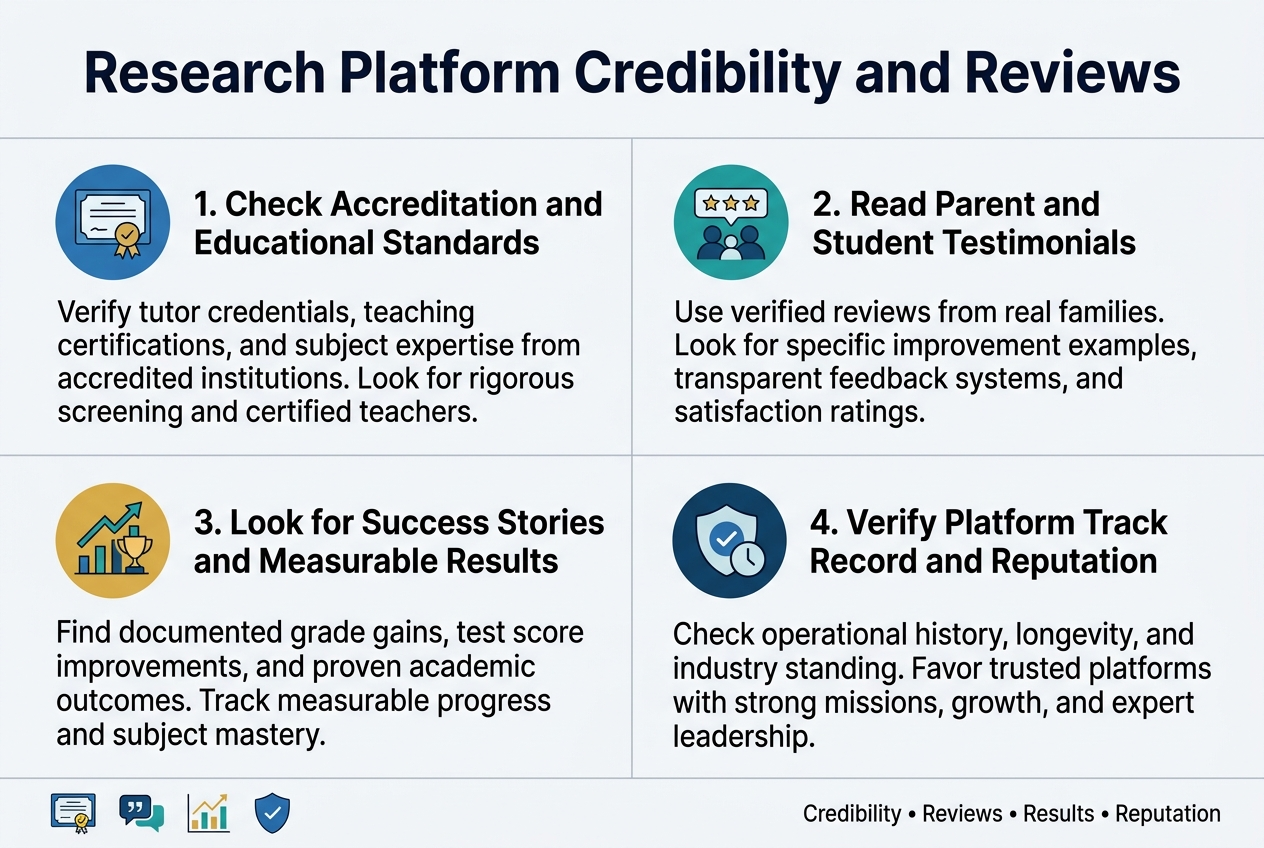
Check accreditation and educational standards compliance
When researching platform credibility, verify that tutoring services maintain proper educational standards and certifications. Look for platforms that require tutor credentials verification, such as teaching certifications or subject matter expertise from accredited institutions. Established platforms like Varsity Tutors accept only 10% of tutor applicants, ensuring rigorous quality standards, while services like Skooli exclusively employ certified teachers with formal classroom experience and state certification requirements.
Read parent and student testimonials
Authentic reviews from verified families provide valuable insights into platform effectiveness and reliability. Examine testimonials for specific examples of improvement, such as documented grade increases or confidence building achievements. Quality platforms feature transparent review systems where only actual students can leave feedback, as seen with Wyzant’s credible review database, while comprehensive satisfaction metrics like Tutor-ology’s 98.2% student satisfaction rate demonstrate consistent positive outcomes.
Look for success stories and measurable results
Effective tutoring platforms document concrete academic improvements through case studies and performance data. Research shows that quality online tutoring helps 90% of students improve when proper matching occurs. Look for platforms that track measurable outcomes, such as Varsity Tutors’ documented SAT score improvements averaging 100-200 points, or specific subject mastery achievements like students progressing from struggling with math concepts to volunteering answers in class.
Verify platform track record and reputation
Investigate the platform’s operational history, longevity, and industry standing to assess reliability. Established services like Khan Academy’s nonprofit mission-driven approach ensures permanent free access, while newer platforms like Tutor-ology demonstrate rapid growth with 1,000+ students served across 5 countries since 2022. Consider platforms featured in educational publications or those founded by experienced educators with proven track records in traditional and digital learning environments.
Ensure Customization and Adaptability
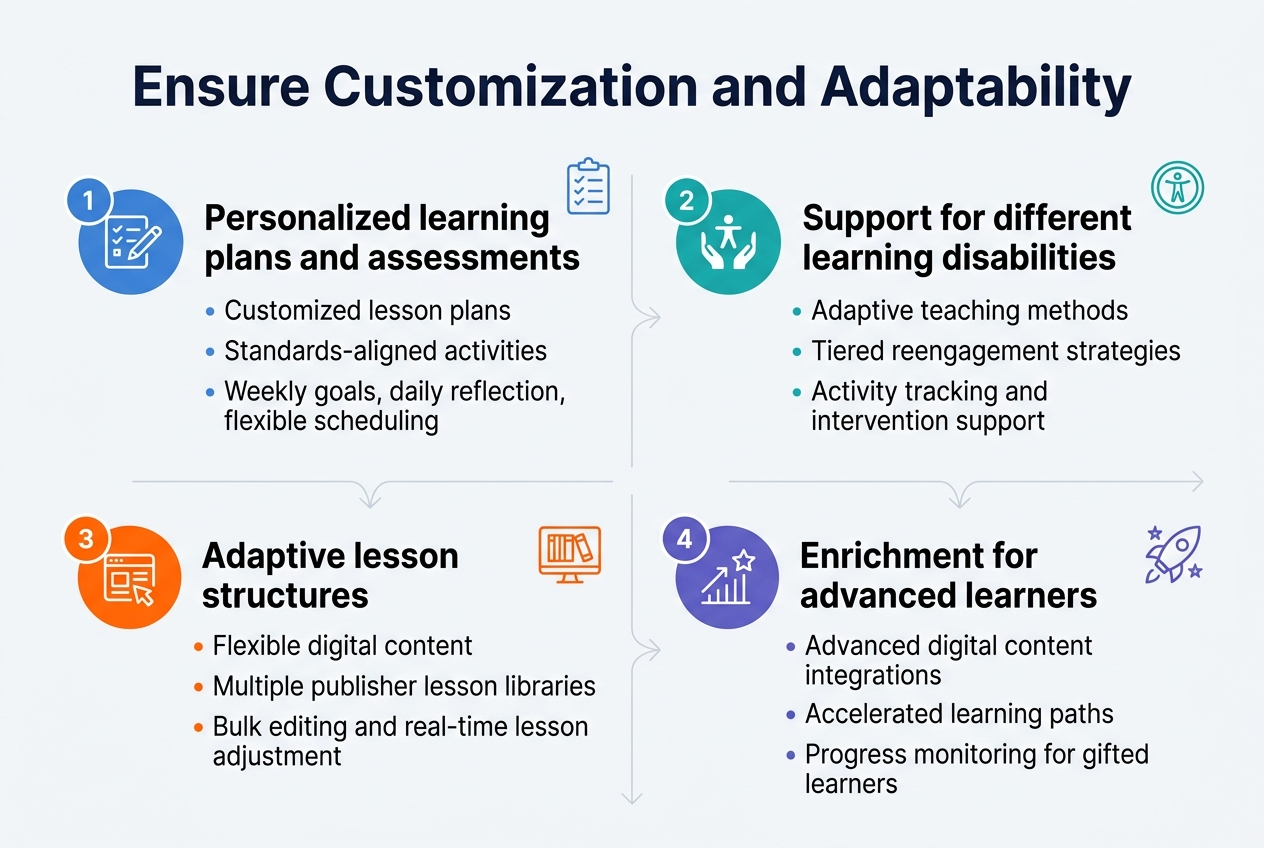
Look for personalized learning plans and assessments
When evaluating how to choose an online tutor, prioritize those who offer customized lesson plans tailored to your student’s specific needs. Effective tutors create individualized instruction plans with standards-aligned activities that allow students to progress at their own pace. Look for tutors who provide weekly goals, daily reflection opportunities, and flexible scheduling where students can complete assignments in any order they choose. This personalized approach increases student engagement and develops self-management skills.
Check support for different learning disabilities
Assess whether potential tutors can accommodate diverse learning needs through adaptive teaching methods. Quality online tutors should offer tiered reengagement strategies to support students who aren’t meeting participation thresholds, creating customized support plans to get learners back on track. They should also provide comprehensive activity tracking to monitor student engagement and identify areas requiring intervention, ensuring all students receive appropriate accommodations regardless of their learning challenges.
Evaluate adaptive lesson structures
Consider tutors who utilize flexible digital content offerings and integrated learning platforms. The best online tutors have access to extensive pre-built lesson libraries from multiple publishers, enabling them to quickly adapt content delivery based on real-time student performance. Look for educators who can seamlessly integrate various digital tools and modify lesson structures through bulk editing capabilities, saving valuable time while maintaining educational quality.
Assess enrichment programs for advanced learners
Examine whether tutors offer enhanced learning opportunities for students who need additional challenges beyond standard curriculum requirements. Quality online tutors should provide access to advanced digital content integrations and specialized programs that can accommodate accelerated learning paths. They should also maintain comprehensive progress monitoring systems that track student advancement and adjust instruction accordingly, ensuring gifted learners remain appropriately challenged and engaged throughout their educational journey.
Plan for Parental Involvement and Progress Tracking
Review available parent dashboards and reporting features
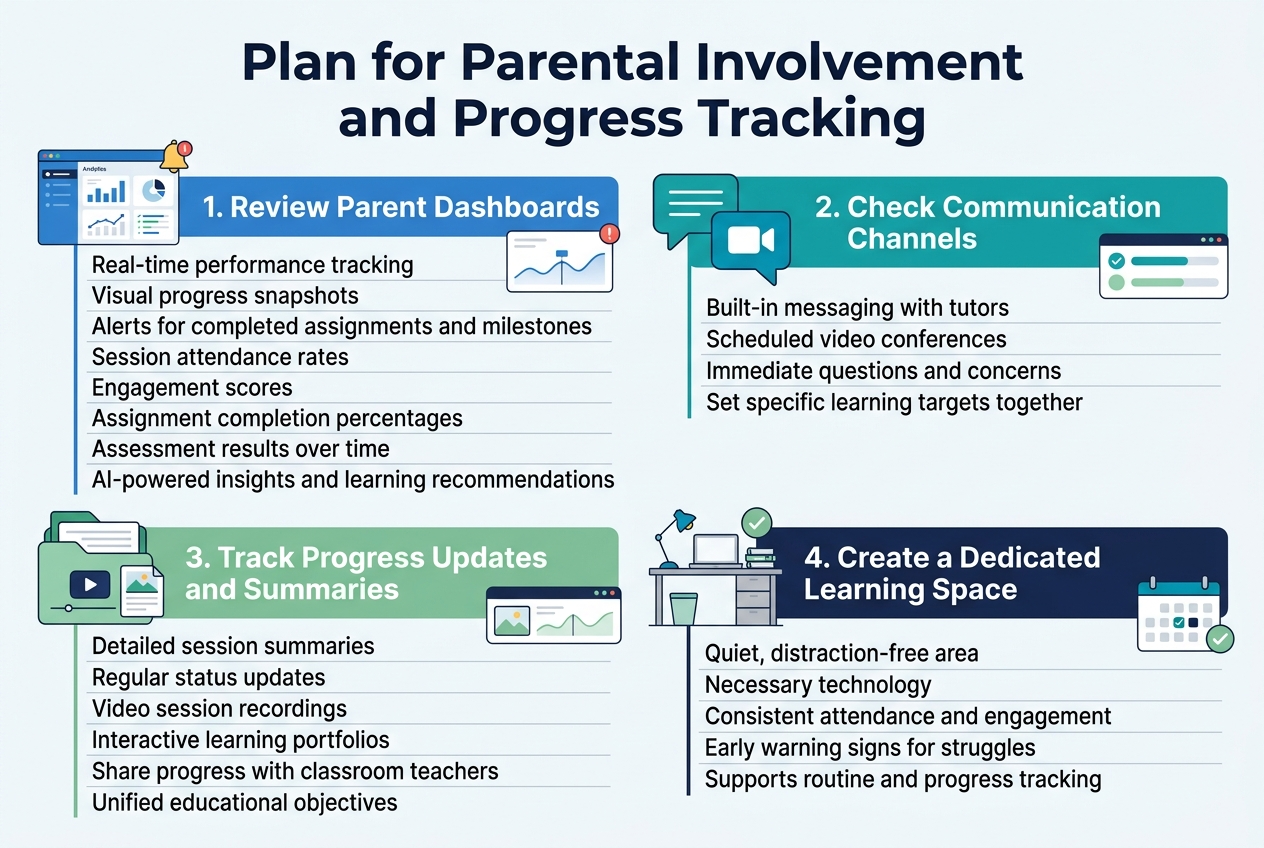
When evaluating online tutoring platforms, prioritize those offering comprehensive parent dashboards with real-time performance tracking capabilities. Look for platforms that provide visual progress snapshots, alert systems for completed assignments and learning milestones, and detailed analytics showing your child’s performance against grade-level expectations. These dashboards should display session attendance rates, engagement scores, assignment completion percentages, and assessment results over time. Advanced platforms may include AI-powered progress insights that predict potential learning challenges and recommend customized learning sequences based on your child’s performance history.
Check communication channels with tutors
Direct communication pathways with tutors are essential for maintaining oversight of your child’s educational progress. Seek platforms that offer built-in messaging systems connecting you directly to your child’s tutor for immediate questions and concerns. Many top-tier platforms also provide scheduled video conferencing options for face-to-face progress discussions. These communication channels allow you to address issues while they’re still manageable and collaborate with tutors on setting specific learning targets for your child.
Look for detailed progress updates and session summaries
Comprehensive progress tracking requires platforms that provide detailed session summaries and regular status updates. Video session recordings offer invaluable insights into lesson dynamics and your child’s actual participation levels. Look for platforms that create interactive learning portfolios aggregating your child’s work over time, building a visual chronicle of skill development. These portfolios can be shared with classroom teachers to bridge online tutoring with conventional school education, ensuring unified educational objectives.
Create a dedicated learning space at home
Establishing a proper learning environment supports effective progress monitoring and academic success. Set up a quiet, distraction-free area equipped with necessary technology for seamless online tutoring sessions. This dedicated space should facilitate consistent attendance and engagement, two critical metrics that serve as early warning systems for potential academic struggles. A well-organized learning environment helps maintain the routine necessary for tracking meaningful progress patterns over time.
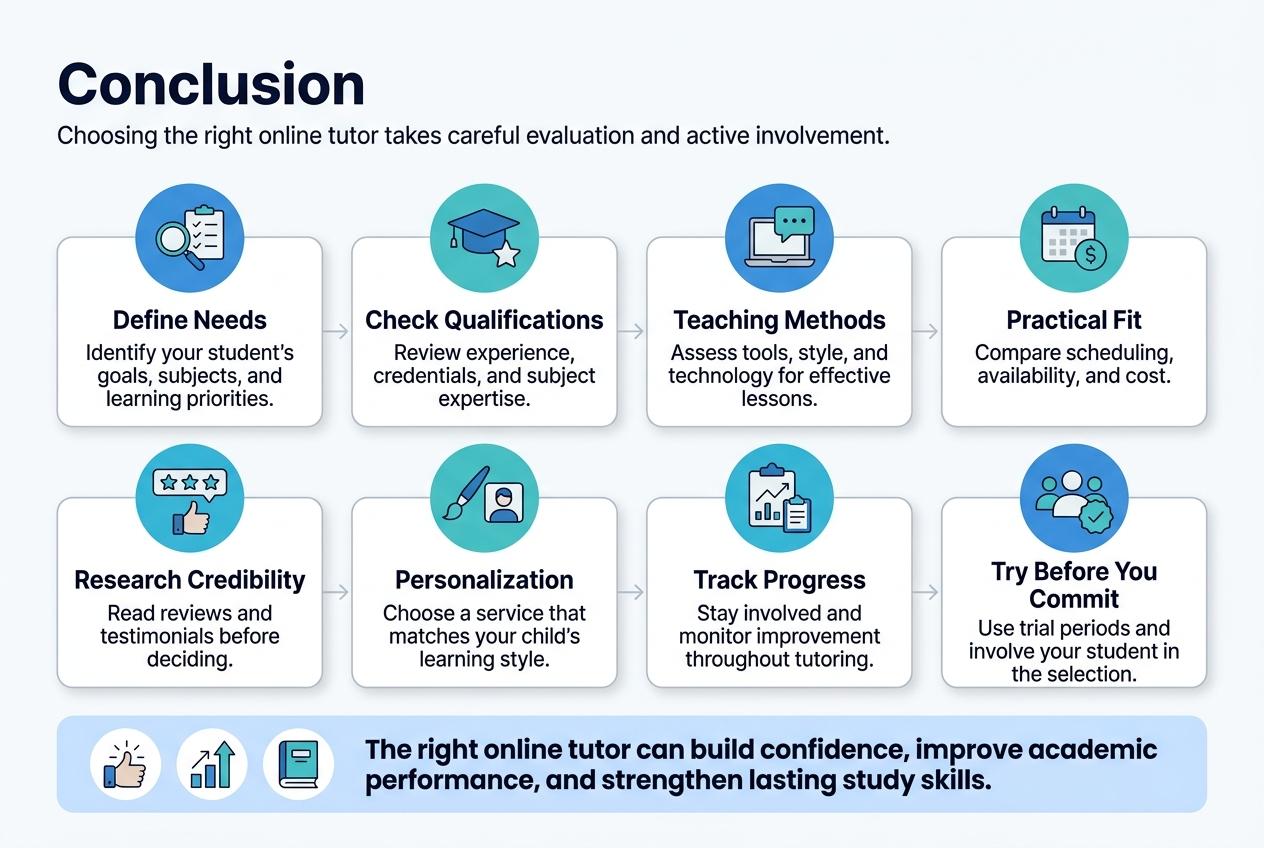
Finding the right online tutor requires careful consideration of multiple factors that work together to create an effective learning environment. By defining your specific tutoring needs, evaluating qualifications and experience, assessing teaching methods and technology tools, and considering practical aspects like scheduling and costs, you can make an informed decision that truly benefits your student. Remember to research platform credibility through reviews and testimonials, ensure the service offers customization for your child’s learning style, and maintain active involvement in tracking progress throughout the tutoring journey.
The investment in quality online tutoring can transform your child’s educational experience, providing personalized attention and flexible learning opportunities that traditional classroom settings may not offer. Take advantage of trial periods offered by many platforms to test compatibility before committing, and involve your student in the selection process to ensure they feel excited and engaged about their learning journey. With the right online tutor, your child can build confidence, improve academic performance, and develop lasting study skills that will serve them well beyond their current educational goals.